phoenix Zoo TRAIL CARDS
Location:
Future Ocelot Exhibit (Old Mountain Lion)
History:
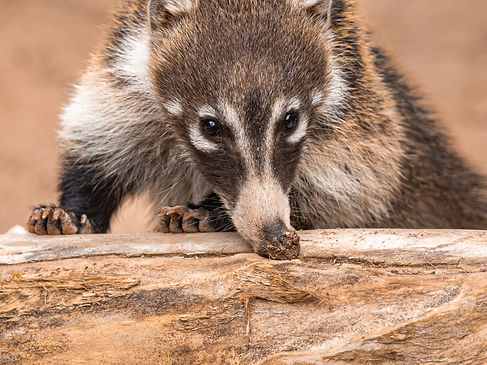
The Zoo acquired three female white-nosed coatimundi on 01/28/26. They are currently being housed in the old mountain lion habitat, on exhibit and visible to guests.
Three girls estimated to be 7 months old as of Feb. 2026.
One of the girls was rescued on Aug 5, 2025 from the area of Resolution Copper's Magma Mine near Superior, AZ. She was found by an employee inthe hoist building for the mine. There was a known family troop of coati's in the area, so attempts were made to reunite he with her family, but they were unsuccessful. This one was dubbed 'Maggie Mae' after the Magma Mine near Superior, AZ, where she was found. Her name was changed to 'Aster' when names were chosen for all three.
Around the same time, 2 more coati babies were found by an individual near Tucson and brought to Tucson Wildlife. They were brought to Southwest Wildlife on Aug 15, 2025. There was no more information about these 2 girls.
After introductions, the three girls got along very well. Without a troop and adult females to guide them, release back into the wild seemed too risky.
SWCC reported that they are busy, messy, happy girls. Always racing around and exploring. They love enrichment of every kind and need lots to keep them busy for sure.
More Information:
IUCN: Least Concern
Range from AZ to northern Columbia
Tropical species - Southern AZ is northernmost habitat
Related to raccoon and ringtail
Diurnal
Males are solitary while females live in groups of 4-5 individuals
Forage for fruit, invertebrates, small animals
Also know as a coatimundi
Part of raccoon family
Life span ~10 years in wild; early to late teens in managed care
Adults 13 to 27 inches in length from nose to base of tail.
Males are larger than females
Long, flexible noses that can be rotated up to 60 degrees in any direction
Keeps tail erect to help see rest of group in tall vegetation


